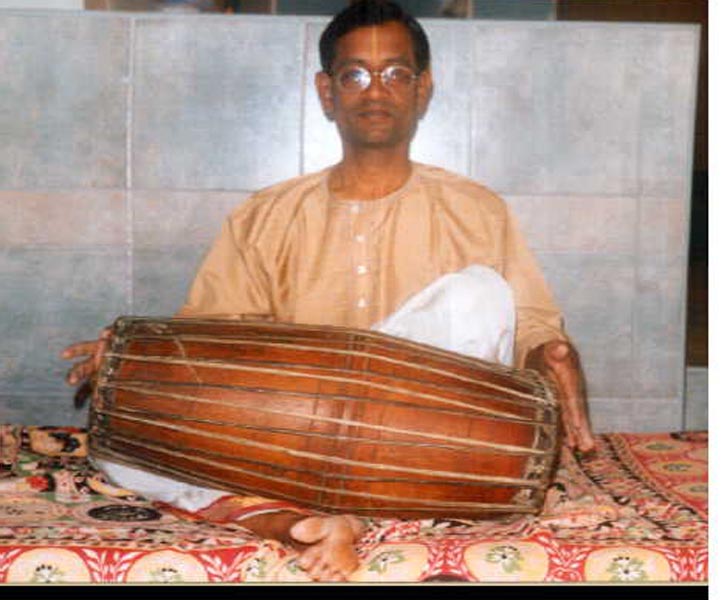
Basic Mridangam Strokes
Master the fundamental tones that form the rhythmic vocabulary of the mridangam
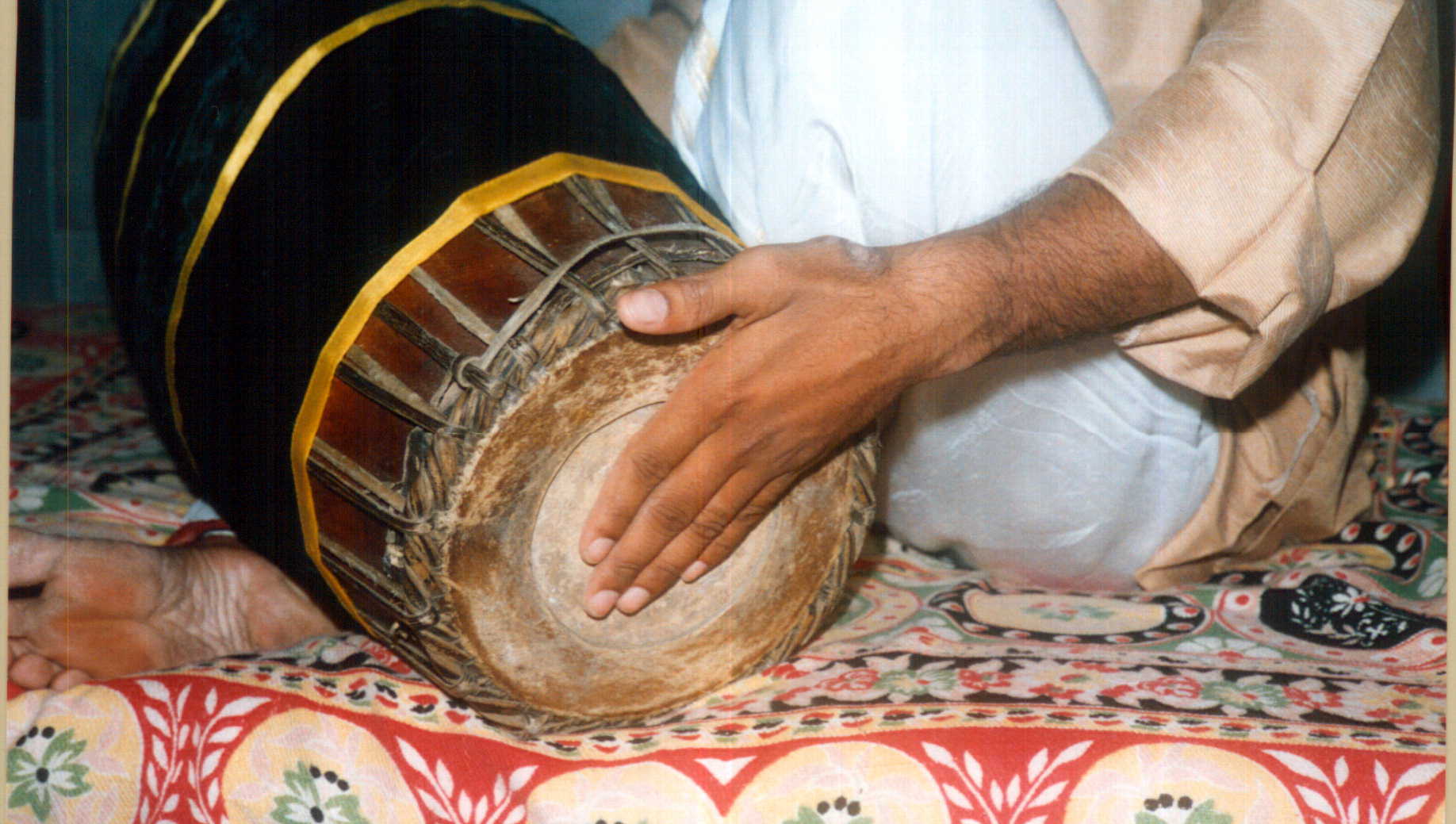 Non-Vibrating
Tha
Left Hand
A non-vibrating tone played on the left hand side of the mridangam. This foundational stroke produces a clear, muted sound essential for rhythmic patterns.
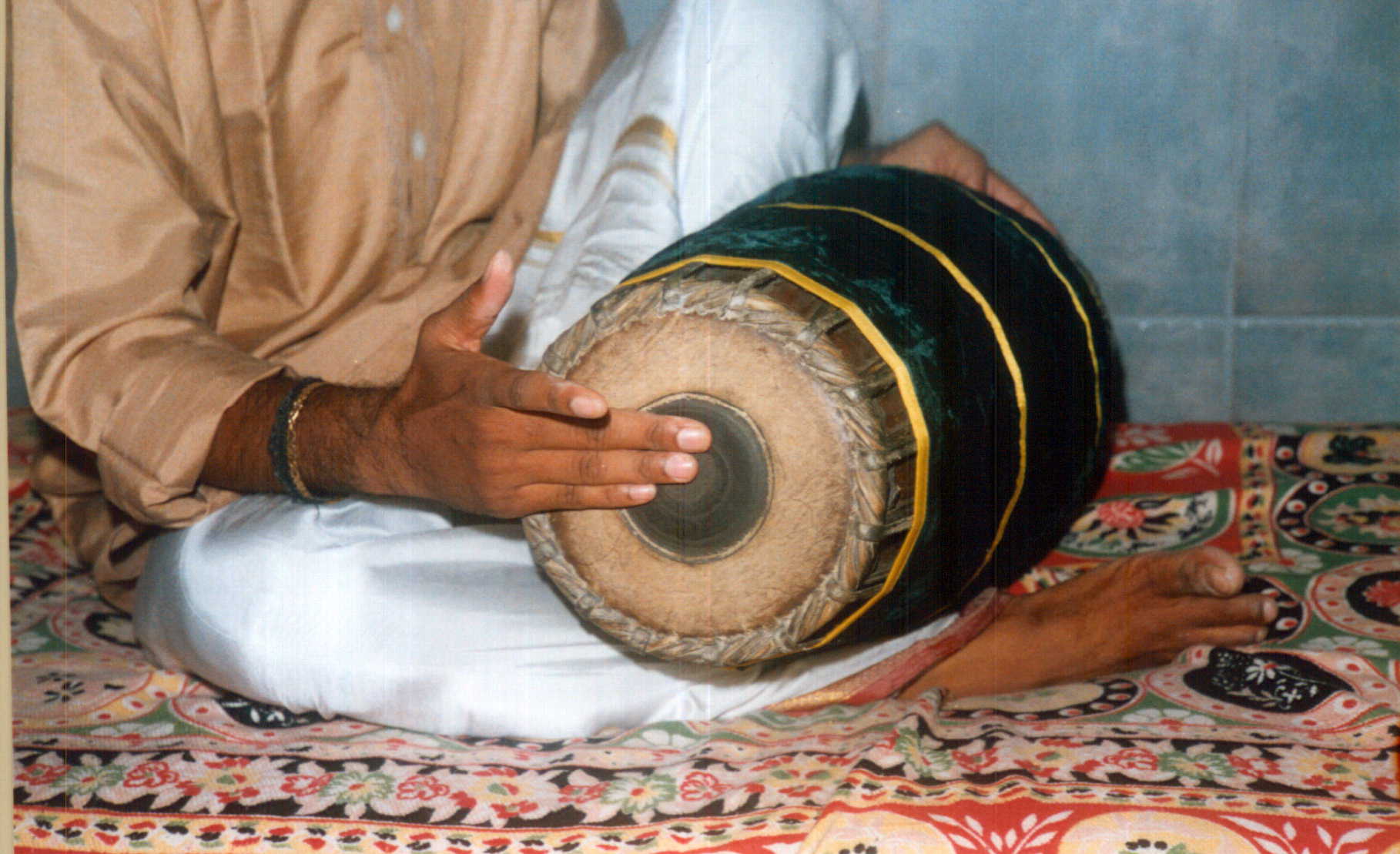 Non-Vibrating
Dhi
Right Hand
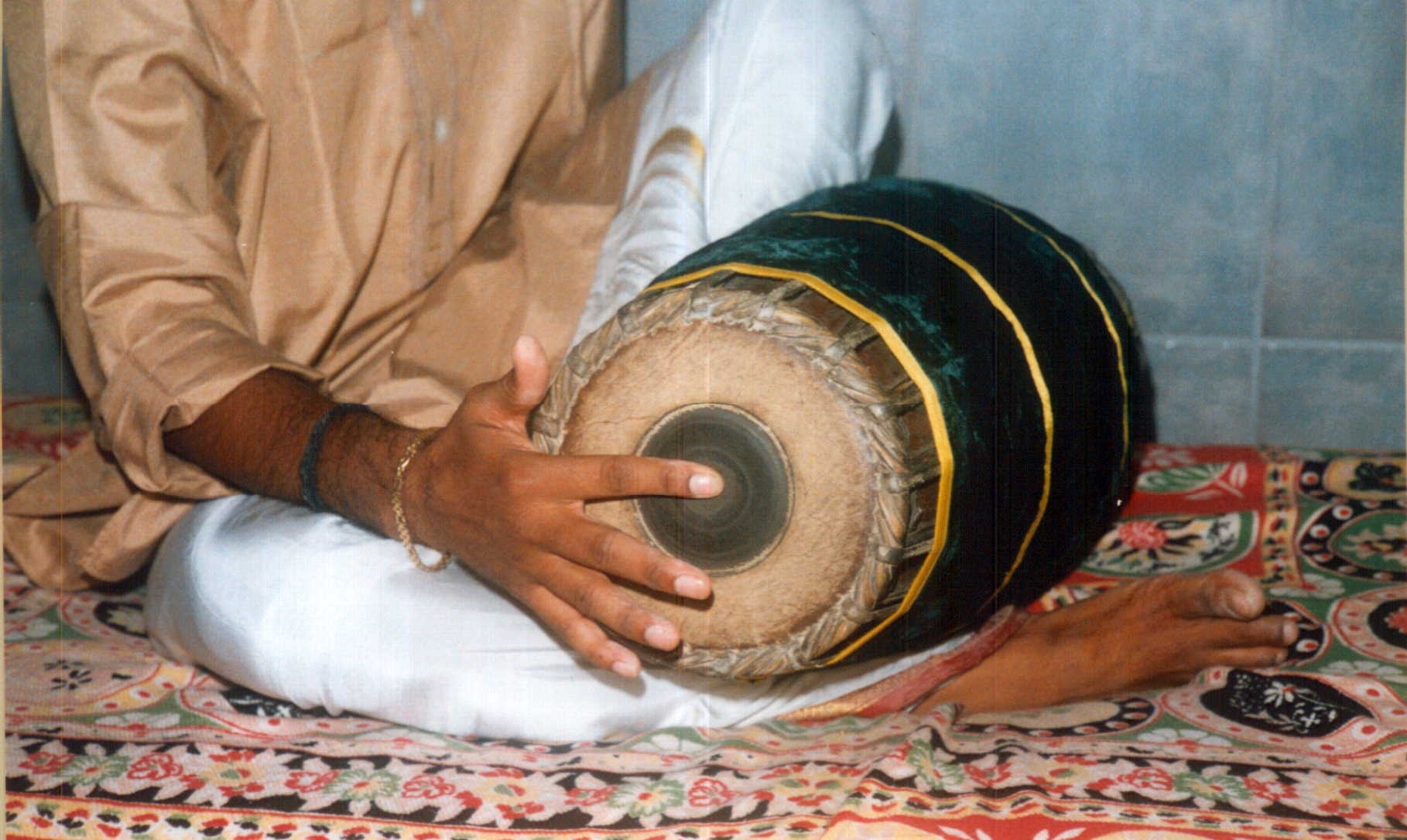
A non-vibrating tone played on the centre black portion using the middle, ring, and small fingers together. Creates a sharp, defined sound.
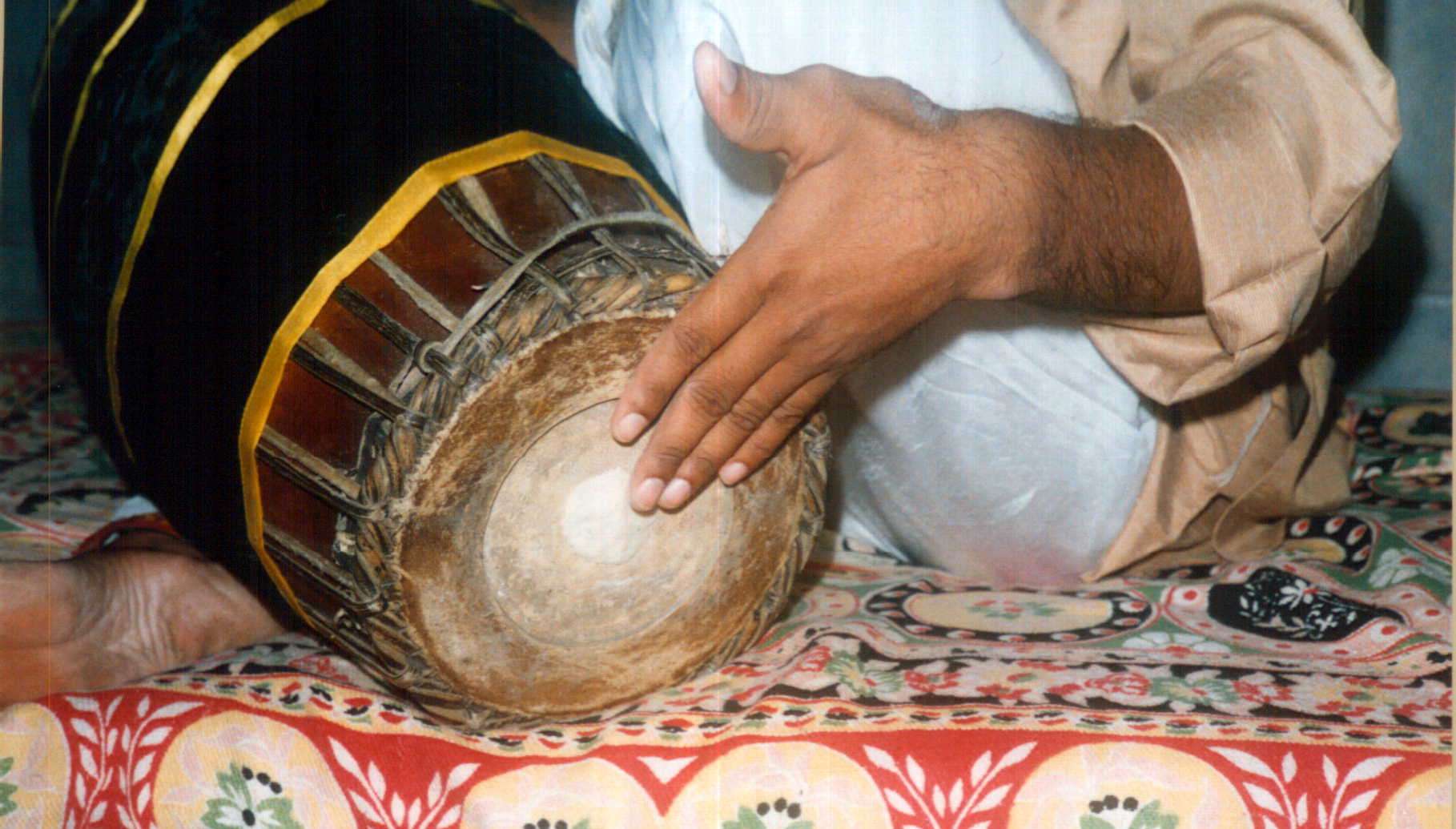
Thom
Left Hand
A resonant vibrating tone played on the outer side of the left hand side. Produces a deep, sustained bass that underpins the rhythm.
 Non-Vibrating
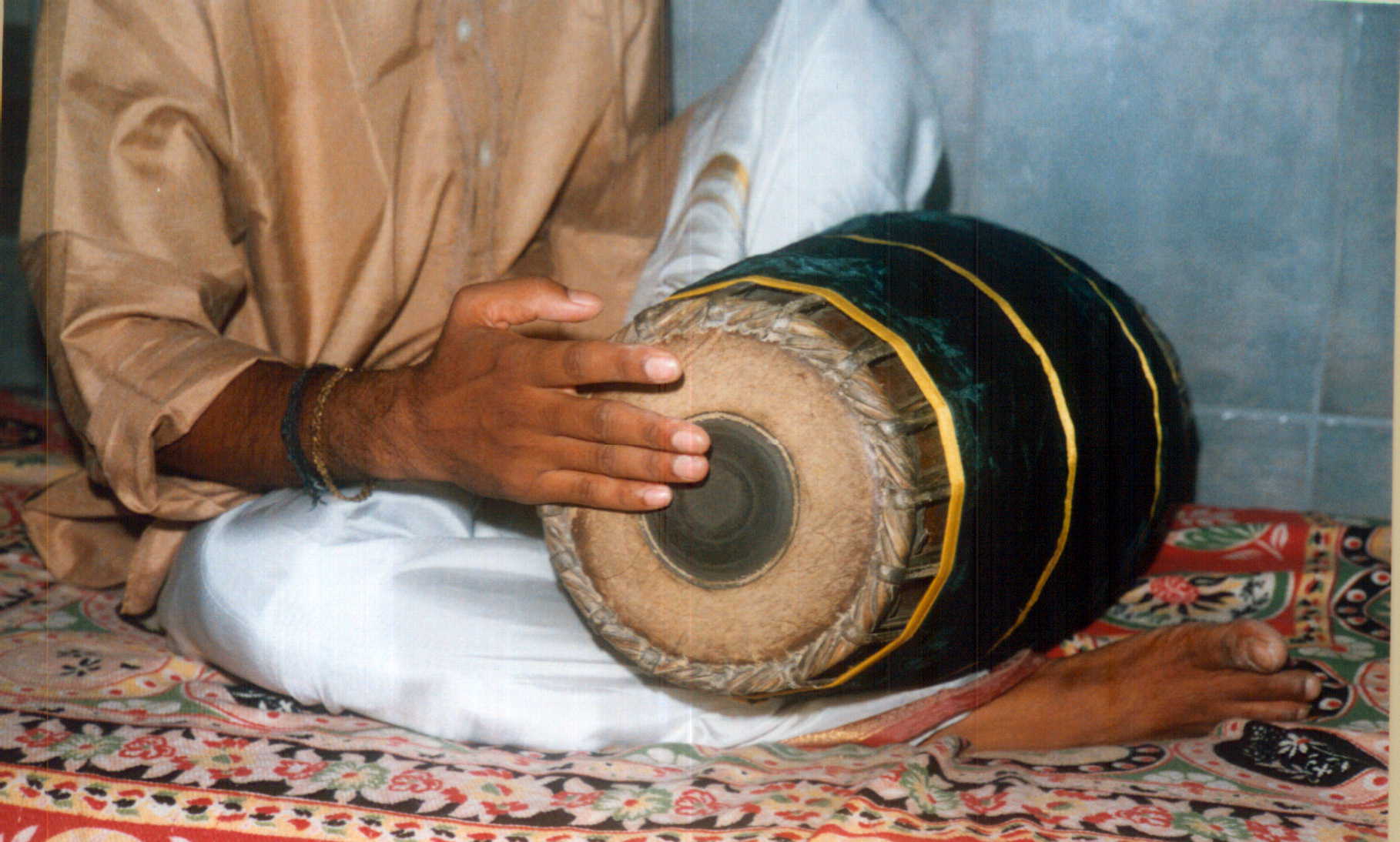
Ta
Right Hand
A crisp non-vibrating tone produced by the index finger striking the exact centre of the black patch on the right hand side.
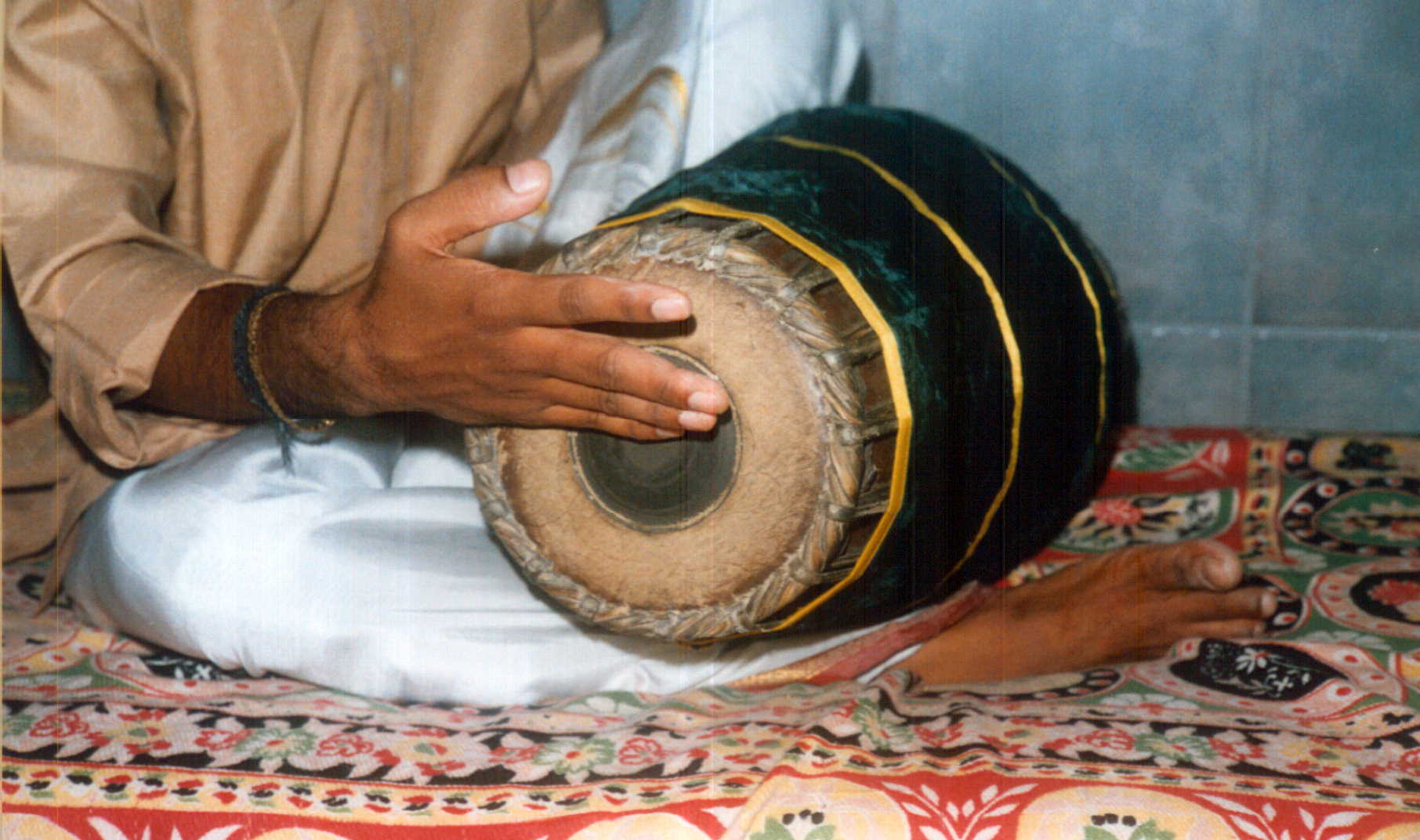
Full Chapu
Right Hand
A vibrating tone played with the small finger between the black patch and outer layer. Tuned to produce the Adhaara Sadjam — the tonic of the tambura.
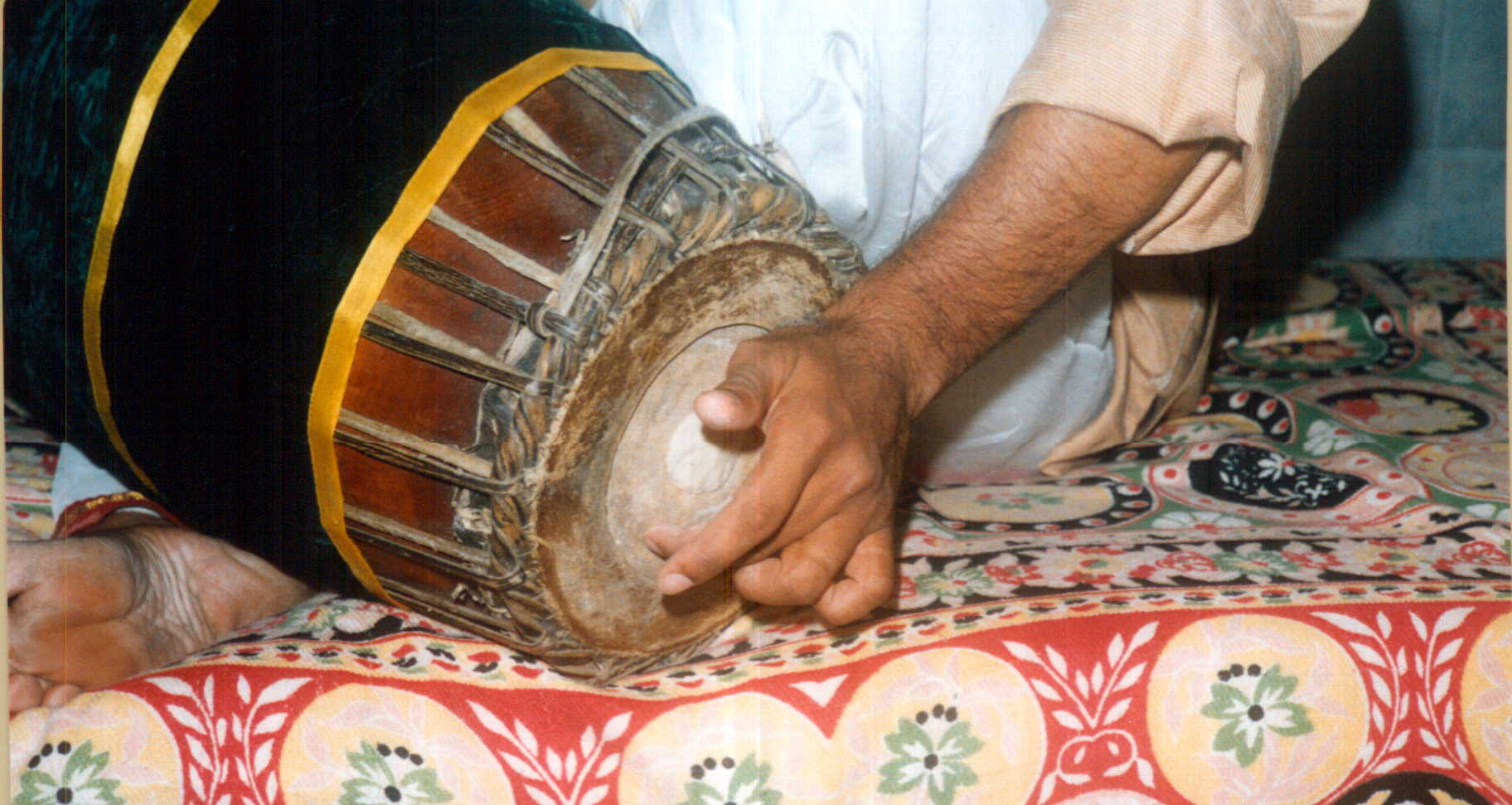
Arai Chapu
Right Hand
A vibrating tone using the small finger at the far end of the black patch. Produces the Top Sadjam — the upper octave tonic of the tambura.
Gumukki
Left Hand • Bass
A deep bass tone on the inner layer of the left side. Requires rava (semolina) paste to produce its rich, resonant quality. Without paste, only Thom is heard.
Two Great Traditions
The art of mridangam is preserved through two distinct schools of playing
Palani Style
Palani M. Subramania Pillai School
Distinguished by using the middle finger as support for playing Nam and Dhin strokes. This technique allows for a particular tonal quality and agility in complex rhythmic passages.
Tanjore Style
Traditional Tanjore School
Characterized by using the ring finger as support for Nam and Dhin. This classical approach has been passed down through generations of Tanjore master musicians.
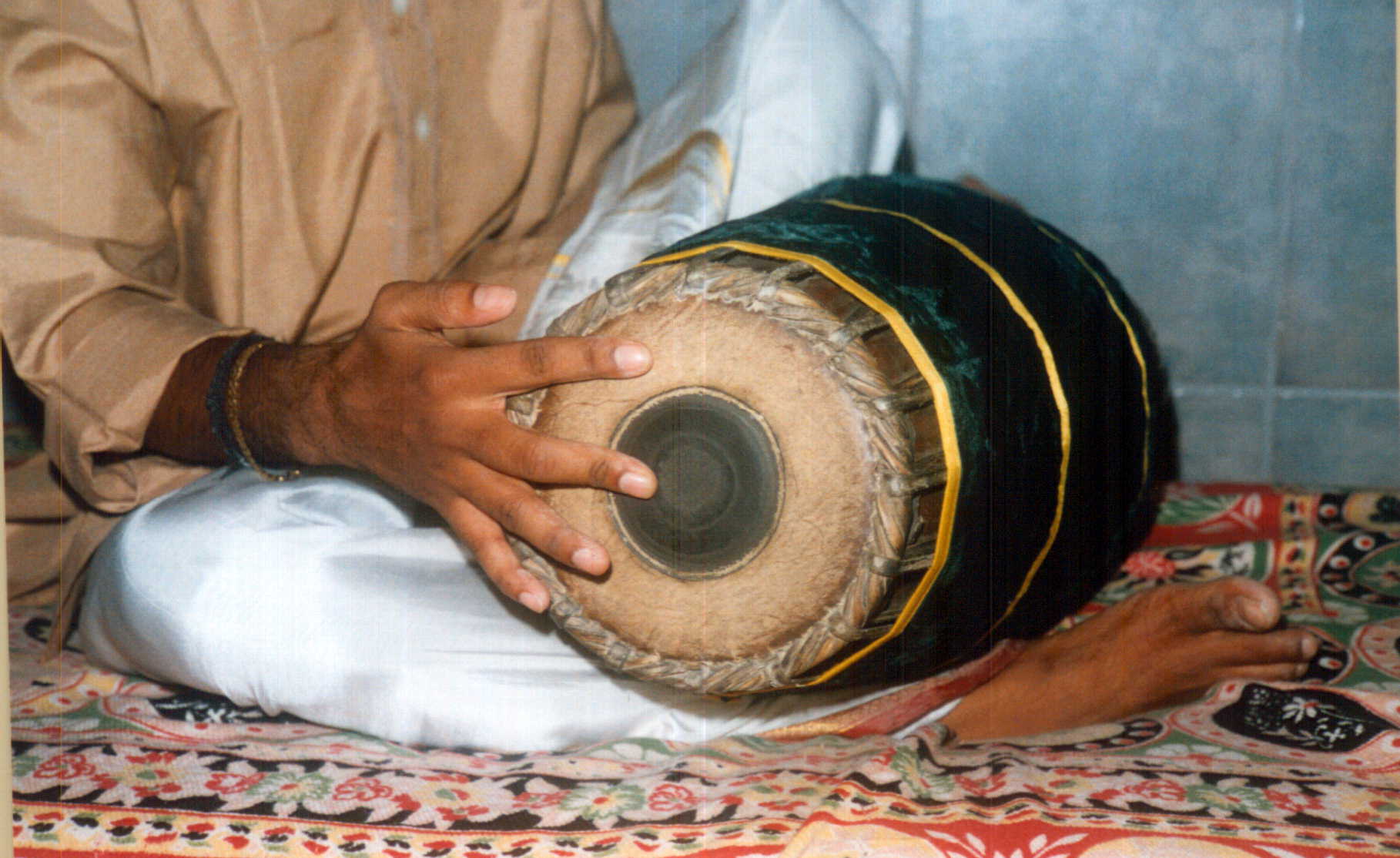
Nam
Palani Style
A vibrating tone on the outer layer of the right side. Middle finger provides support, allowing for distinctive tonal control.
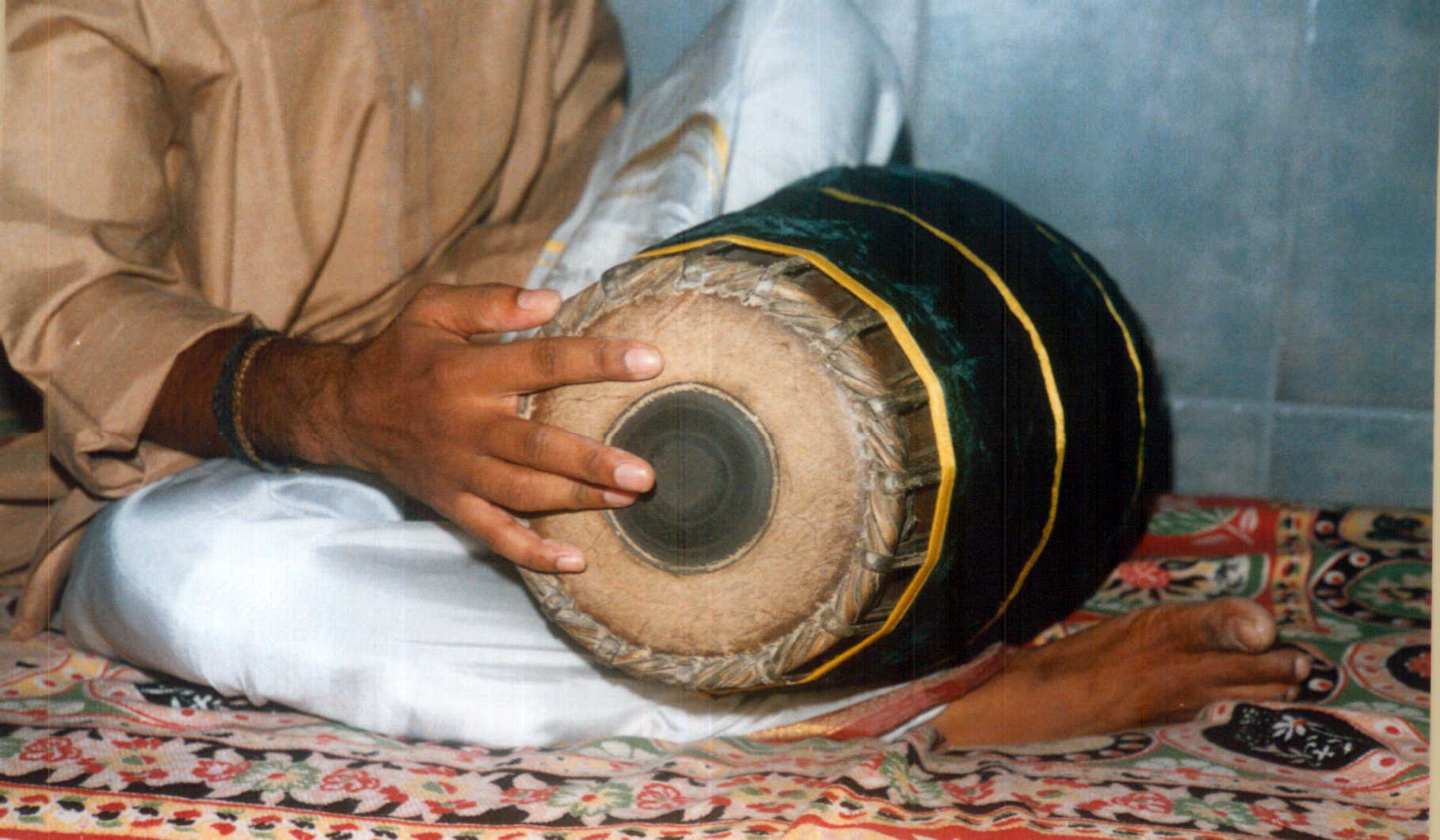
Nam
Tanjore Style
The same vibrating tone, but with ring finger support in the traditional Tanjore manner.
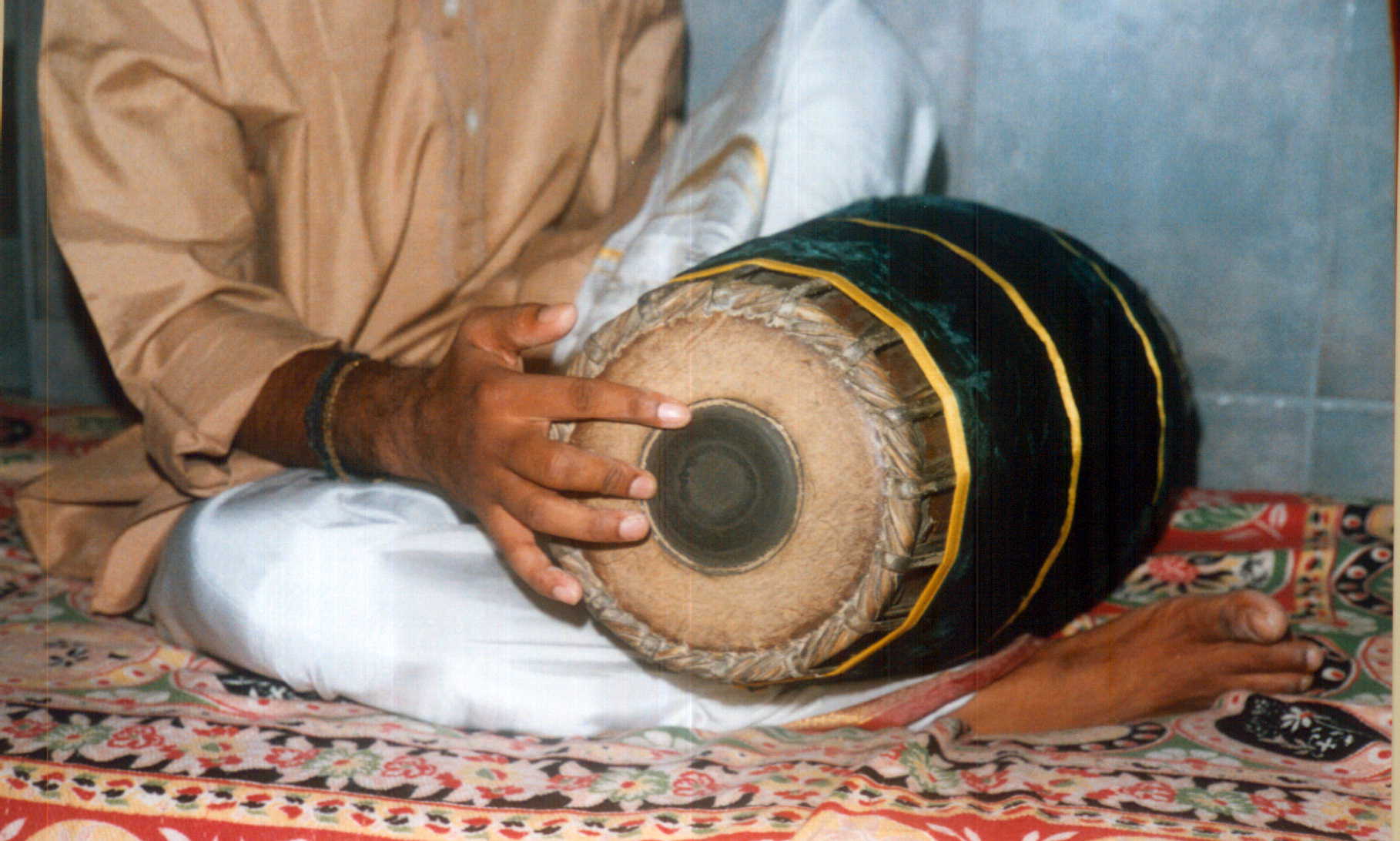
Dhin
Palani Style
Index finger strikes between black patch and outer layer, with middle finger fixed for support. Produces the tonic.
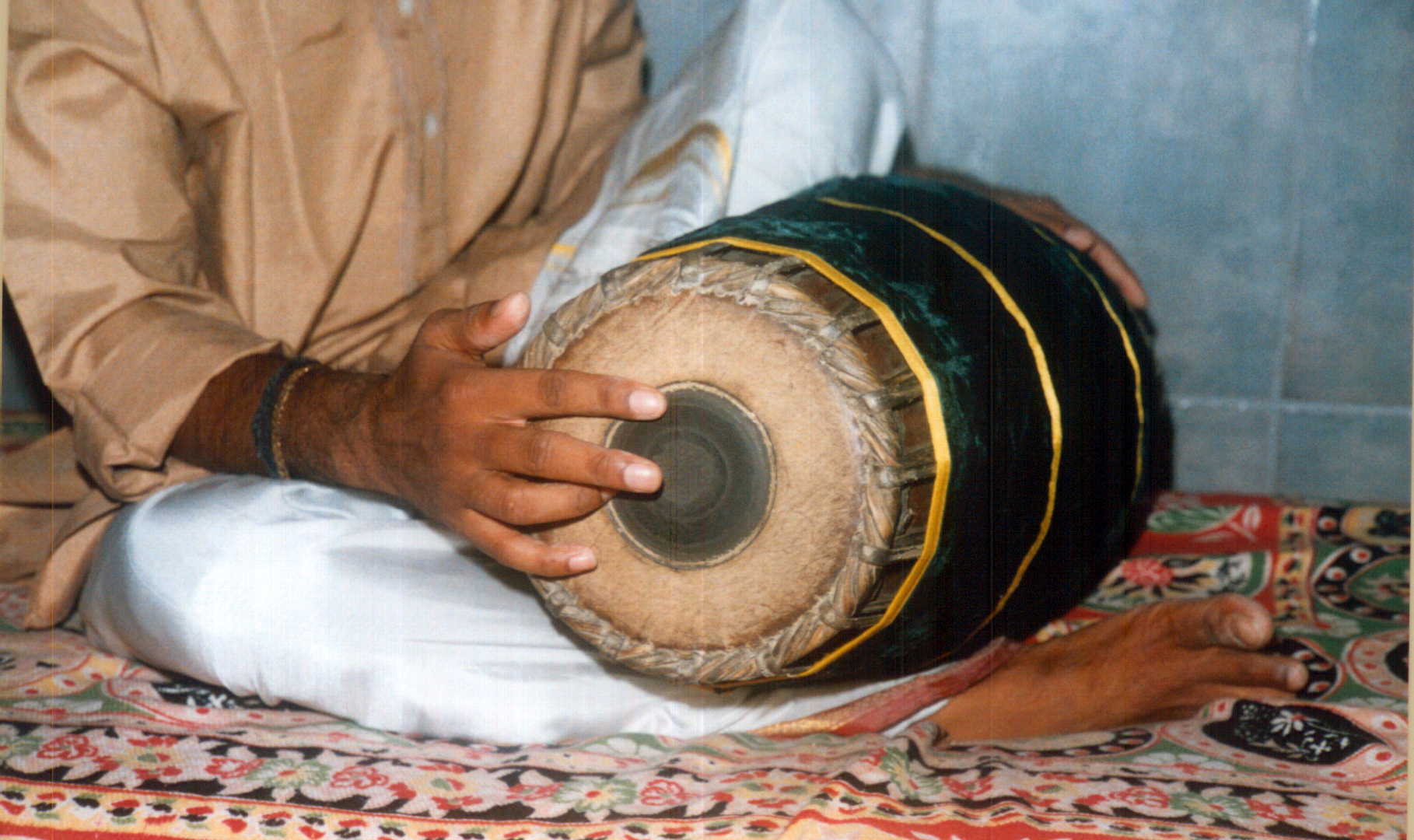
Dhin
Tanjore Style
Same stroke position with ring finger support. The mridangam is tuned using this essential tone.
The Instrument
Understanding the sacred percussion vessel and its preparation
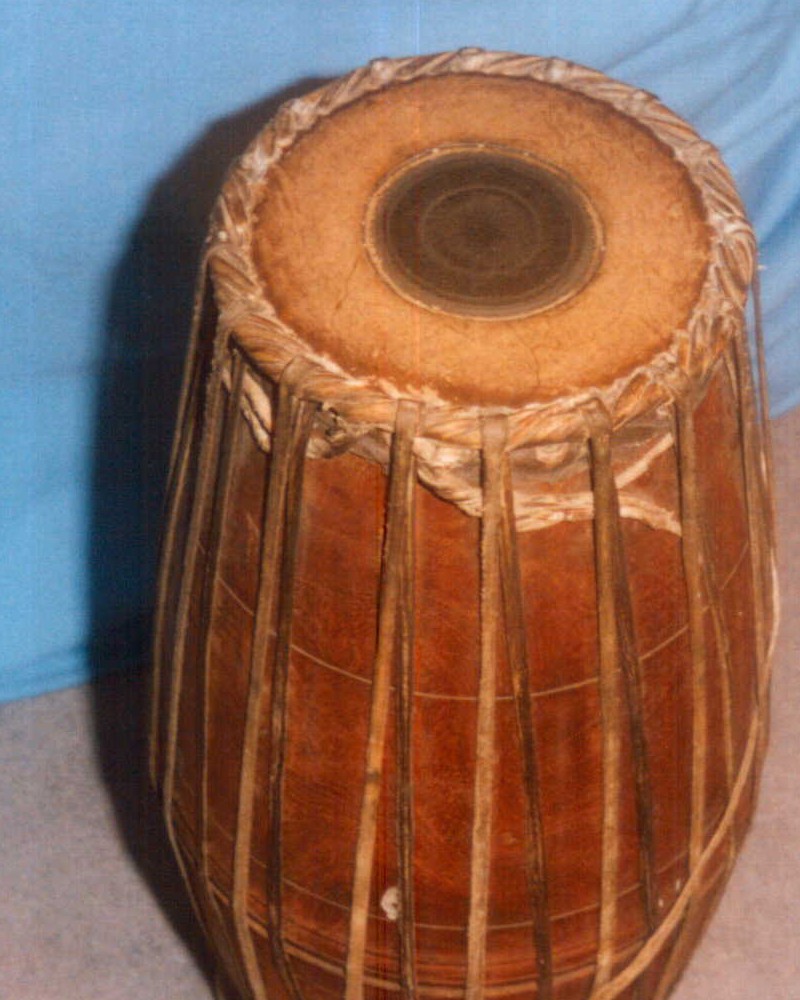
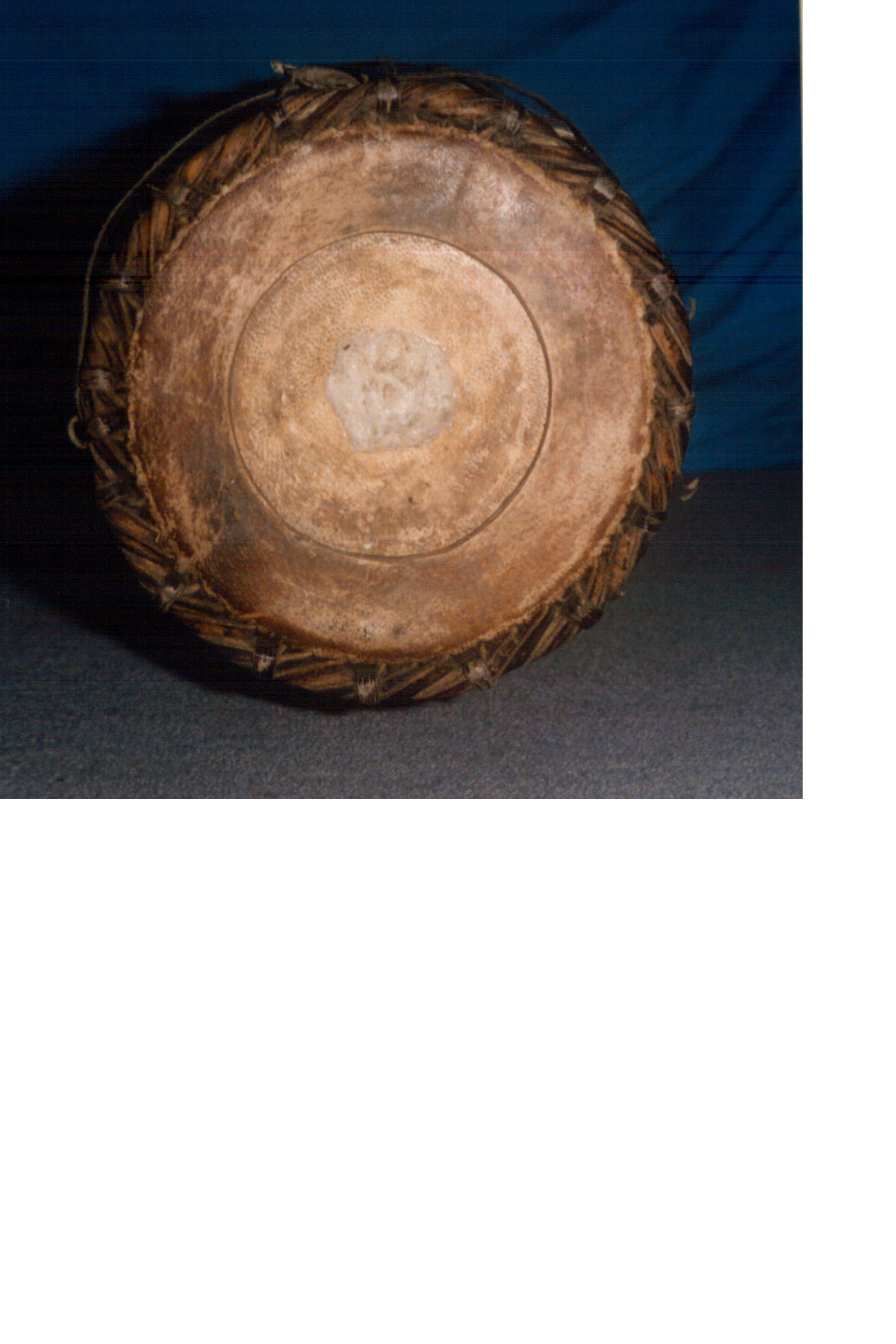
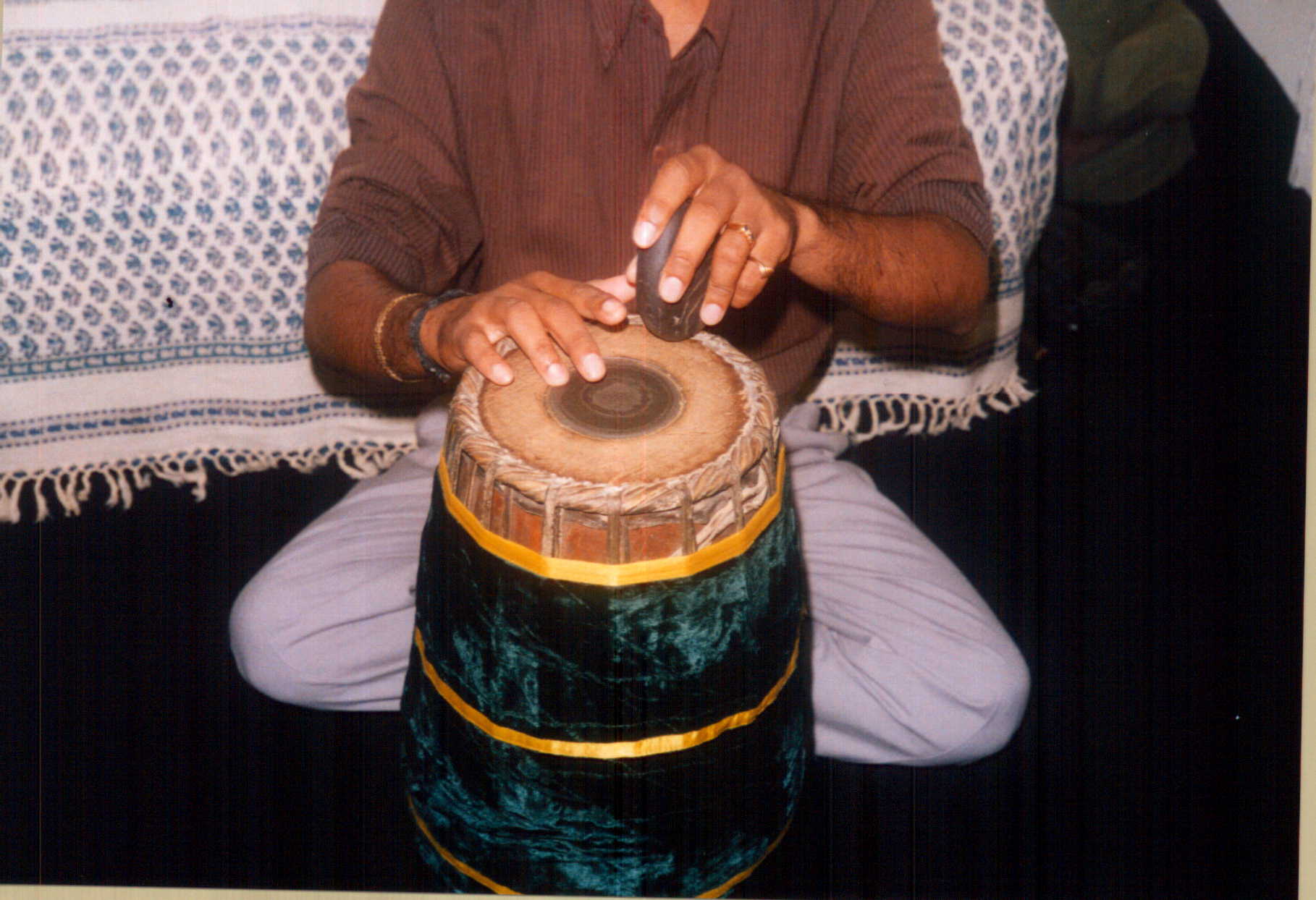
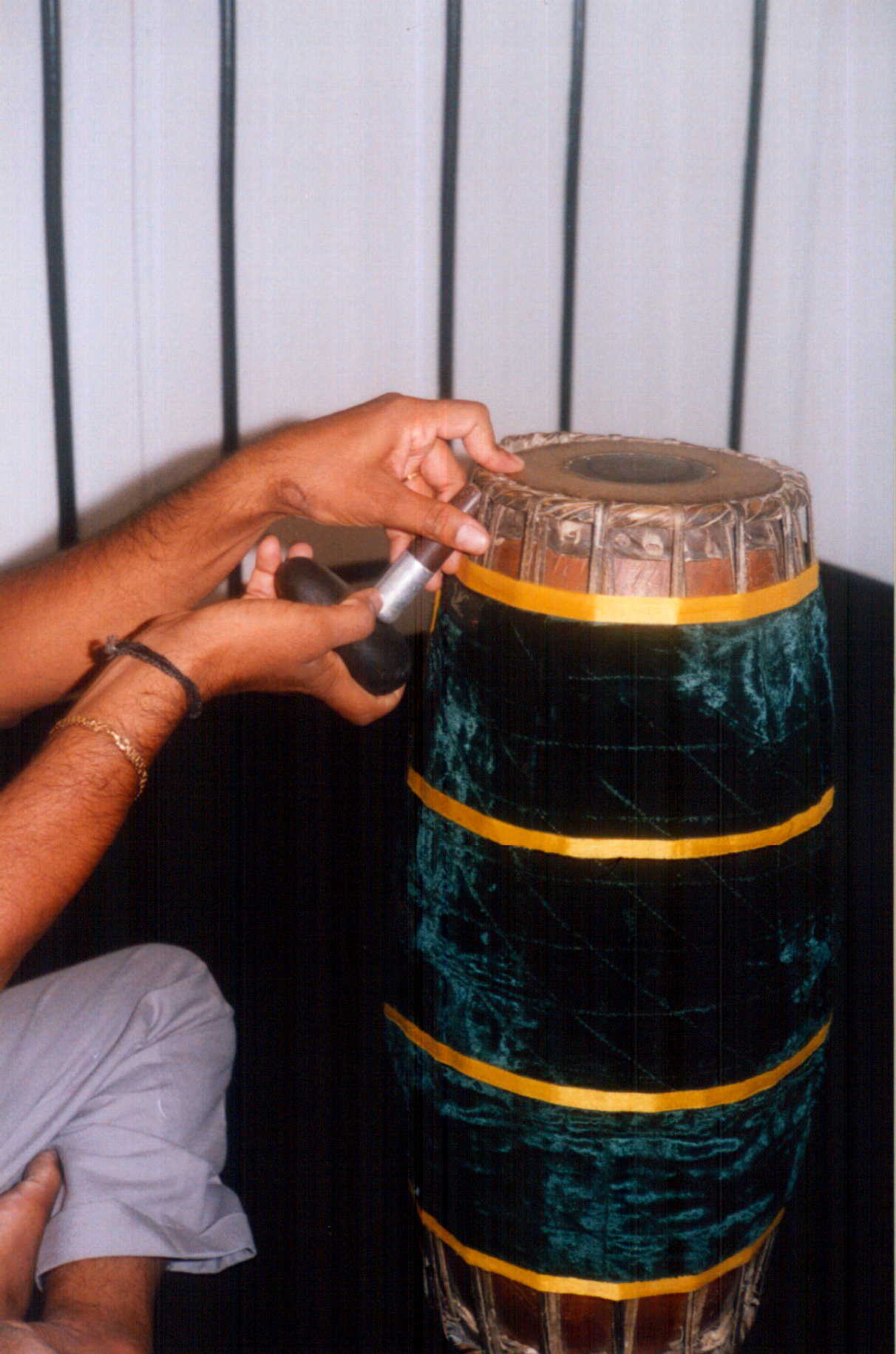
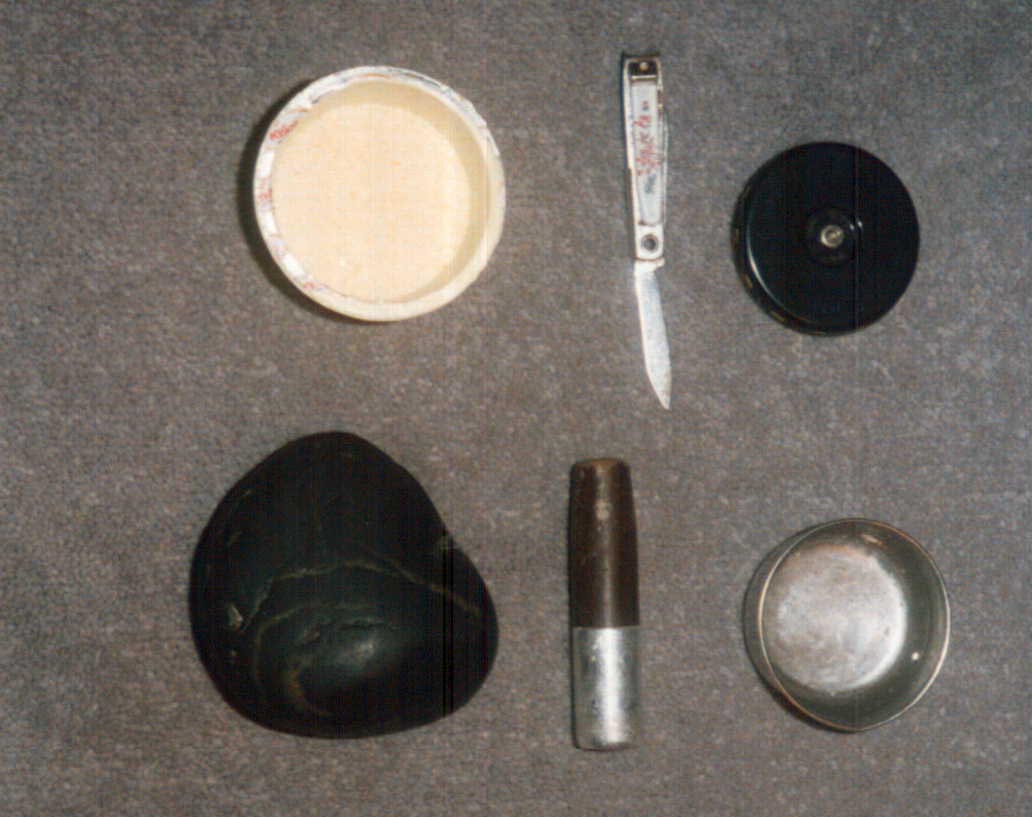
The Mridangist's Kit
Every mridangam player carries essential tools for maintaining and preparing their instrument before and during performance.
- Black Stone — Used to increase pitch by tapping at the top of the instrument
- Small Wood Piece — Used with the stone to reduce pitch by gently tapping beneath the surface
- Small Knife — For removing the rava paste after the concert is complete
- Water Cup — Keeps the rava paste wet throughout the performance for optimal bass quality
- Chromatic Pitch Pipe — Used at home to set the sruti before the concert
The Art of Posture
Scientific positioning for endurance and optimal sound production
Perfect Alignment
The traditional sitting posture is not merely aesthetic — it is a scientifically developed position that enables proper sound production, prevents fatigue during long concerts, and ensures healthy blood circulation to the legs despite the instrument's weight.
The mridangam features three carved rings that serve as reference points for proper body alignment:
The Three Ring System
First ring aligns parallel to the right elbow
Center ring aligns with body center; right foot rests here on outer edge
Third ring supports the left leg, securing the instrument